Kat irtifakı vs kat mülkiyeti: Turkish title deeds
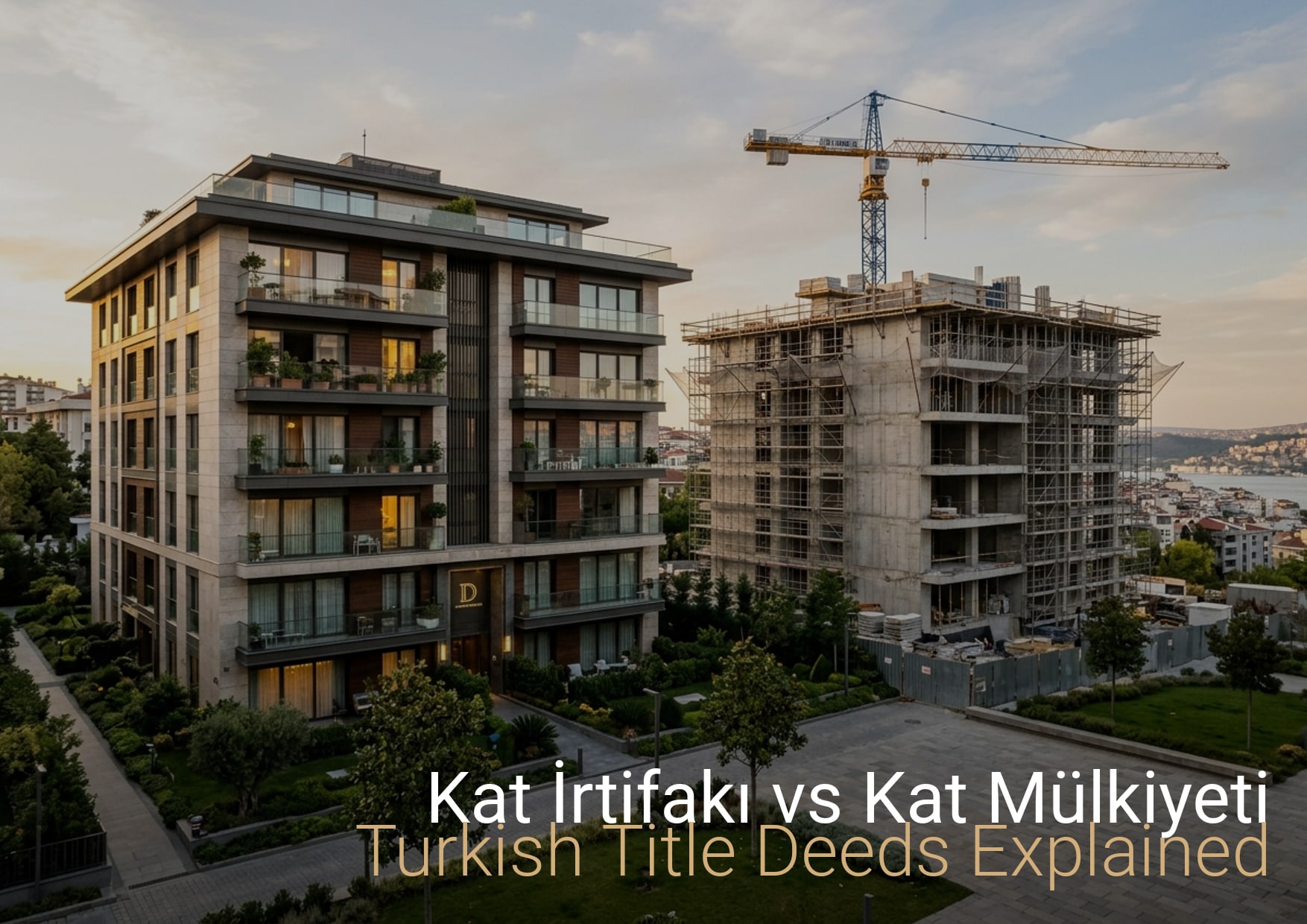
Anyone who reads a Turkish title deed closely for the first time stops at the same place. One apartment's deed says "kat irtifakı", another says "kat mülkiyeti". Both seem to describe an apartment, but they do not say the same thing. One shows that you own a flat in a finished building. The other shows a share of the land reserved for a flat that is still to be completed. This article explains both terms, the difference between them, and what to check before buying an apartment held under kat irtifakı, based on Türkiye's Condominium Law (Kat Mülkiyeti Kanunu, Law No. 634).
What is kat mülkiyeti?
Kat mülkiyeti (condominium ownership) is ownership of a separately usable part of a completed building — an apartment, a shop, an office. The law calls each of these parts an "independent unit" and the person who holds it a "unit owner".
What you own under kat mülkiyeti is more than the apartment itself. With it come a share of the land and a right in the common areas — stairs, lifts, the shared garage — in proportion to that land share. Once kat mülkiyeti is established, each independent unit gets its own page in the land registry and, in the law's words, becomes "a separate immovable property".
What is kat irtifakı?
Kat irtifakı (often translated as construction servitude) is a right created for the future independent units of a building that is not yet built or still under construction. The law defines it as "a type of servitude attached to a land share". In plain terms, it is the legal way of saying: "the flat with this number, to be built on this plot to the approved plans, will be yours".
To set up kat irtifakı, the landowner files the approved architectural project and a management plan with the land registry. Each unit's number and the land share assigned to it are written into the declarations section of the deed. So before the building is finished, the registry already shows which flat will belong to whom.
Most apartments sold in new developments change hands at this stage. We cover the other sides of buying before completion in what is an off-plan project.
Kat irtifakı vs kat mülkiyeti: the differences
What separates the two is the state of the building. Point by point:
- The building. Kat mülkiyeti is established on a completed building. Kat irtifakı is established while the building is going up, or before it starts.
- What the right covers. Kat mülkiyeti is ownership of the unit itself. Kat irtifakı is a right attached to a land share, created as the basis for a later move to kat mülkiyeti.
- Documents required. Kat irtifakı needs the approved project and the management plan. Kat mülkiyeti needs those plus iskan, the building occupancy permit.
- Running the building. Under kat mülkiyeti the building is run by its unit owners under the management plan. At the kat irtifakı stage, the holders may appoint a manager, from among themselves or from outside, to see the building through to completion.
The law also covers the space in between. If the building is in fact complete and two thirds of its independent units are actually in use, the kat mülkiyeti rules apply to running the building even if the registry has not yet switched over.
Is kat irtifakı the same as a shared title (hisseli tapu)?
No, and the distinction matters. With a shared title you are one of several co-owners of a property. The deed shows your share, but not which part of the building is yours.
Under kat irtifakı, your land share is tied to a specific independent unit. Your flat's number, the approved project and the management plan are on the register. When the building is finished, which flat is yours has been settled from the start.

How is kat irtifakı converted to kat mülkiyeti?
The key is iskan. The law says kat irtifakı is converted to kat mülkiyeti on the basis of an occupancy permit issued for the whole building. If iskan covers only part of the building, the conversion does not happen.
Since a 2021 amendment, the process largely runs by itself. The authority that issues iskan sends it electronically to the cadastre office, and the land registry converts kat irtifakı to kat mülkiyeti ex officio, without asking for further documents. No new management plan is required for the conversion.
If that step stalls in practice, the law is clear on who can act: the landowner, or even a single kat irtifakı holder, can apply for the conversion. Cost is not a worry here either. These ex officio steps are exempt from the land registry's service fee, and establishing kat mülkiyeti or kat irtifakı is exempt from fees and taxes as long as it involves no transfer of ownership.
Is it safe to buy an apartment under kat irtifakı?
Kat irtifakı is a registered right. An apartment held under it can be sold and bought, and it is registered in your name at the land registry. That is why kat irtifakı deeds are normal in new developments. What matters is that the building is completed in a way that allows the move to kat mülkiyeti. Before you buy, we suggest checking the following.
- Read the declarations section. Your flat's unit number and land share should appear there. Also check for any record of a zoning breach.
- Ask for the approved project. The flat's position and size in the project should match the flat you were shown.
- Ask about iskan. If the building is finished, find out whether iskan has been issued. If not, ask who will obtain it and by when. Without iskan there is no move to kat mülkiyeti.
- Buying with a mortgage? Ask the bank first. Most banks require iskan before lending on an apartment under kat irtifakı. We explain this in what is iskan.
Kat irtifakı holders also have rights against one another. The law entitles each of them to require the others to meet their obligations so the building starts and is completed within the period set in the contract, and to sue if necessary.
If you would like to know the title status of an apartment you are considering, ask our advisors. To see your purchase costs in advance, try our title deed fee calculator. For the whole buying process, see things to consider when buying a house.
Frequently asked questions
What does kat irtifakı mean?
It is a right attached to a land share, created for the future independent units of a building that is not yet built or still under construction. Once the building is finished and iskan is issued, it is converted to kat mülkiyeti.
What does kat mülkiyeti mean?
It is ownership of an independent unit, such as an apartment or a shop, in a completed building. It comes with a land share and rights in the common areas.
Which is better, kat irtifakı or kat mülkiyeti?
Kat mülkiyeti is the later stage, because it shows the building is finished and has iskan. Kat irtifakı is a normal stage in new developments. With a kat irtifakı apartment, the real question is when iskan will be obtained, and by whom.
Do you pay anything when kat irtifakı is converted to kat mülkiyeti?
Under the law, the ex officio conversion is exempt from the land registry's service fee. Without a transfer of ownership, establishing kat mülkiyeti or kat irtifakı is also exempt from fees and taxes.
Can I get a mortgage on a kat irtifakı apartment?
Most banks require iskan before lending on an apartment under kat irtifakı. Your bank gives the definitive answer when you apply with the property's details.
What is the difference between kat irtifakı and a shared title?
With a shared title you are one of several co-owners, but the deed does not say which part is yours. Under kat irtifakı your land share is tied to a specific independent unit, and that unit's number is on the register.