What is a penthouse? Differences and prices
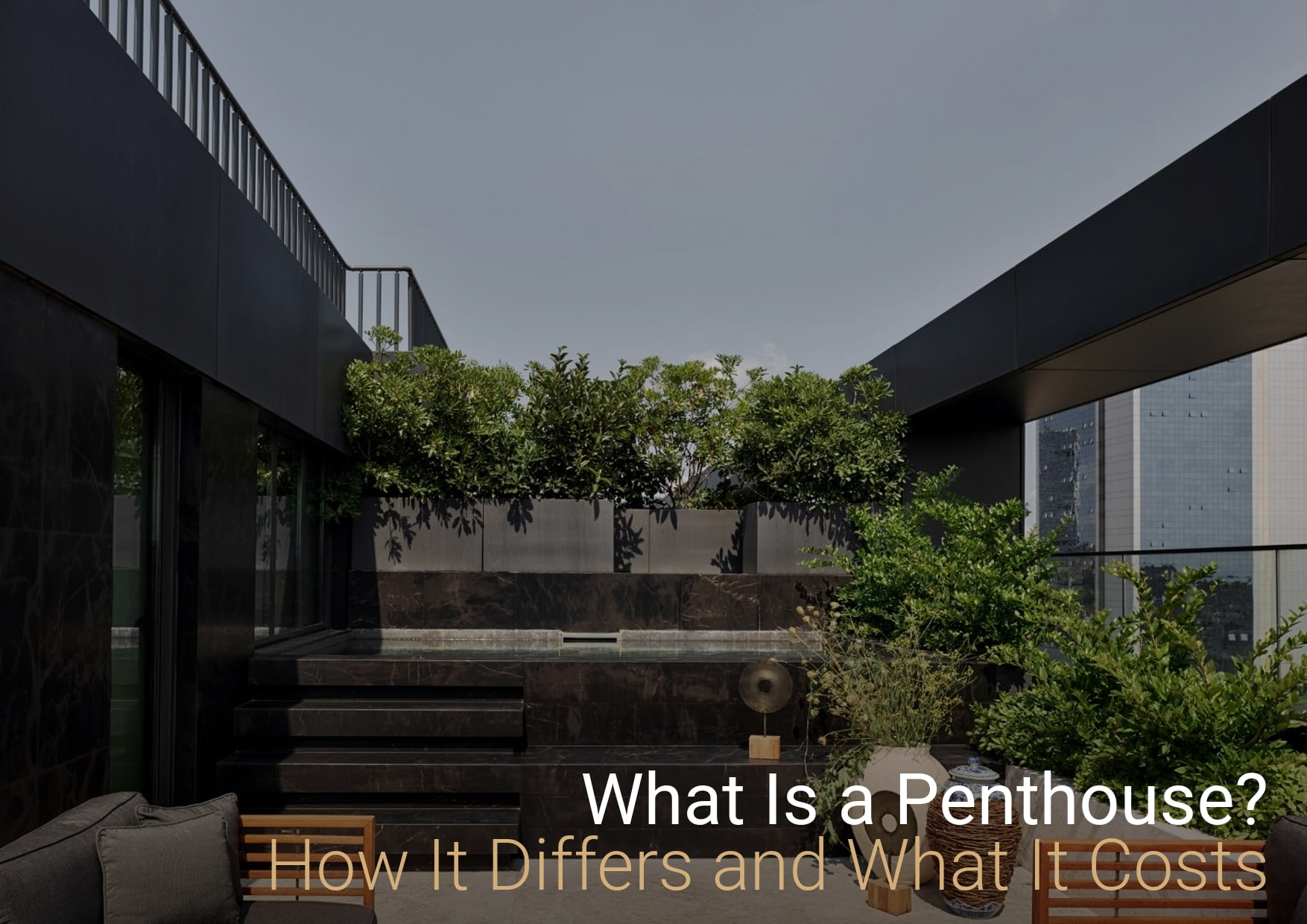
A penthouse is an apartment on the top floor of a building, larger than the apartments below it and often with a terrace. A simple definition, but the market uses the word generously: any top-floor apartment can be sold as a “penthouse”. This article explains what really makes an apartment a penthouse, how it differs from an ordinary top-floor apartment and a duplex, why prices vary so widely and what to look at before you sign.
What does penthouse mean?
The word comes from English. Its root refers to a small annexe leaning against a building’s roof. Today it says the opposite: the most special apartment in the building. In Turkish it is often used interchangeably with çatı katı, literally the “roof floor”, yet what a buyer has in mind is usually not an ordinary çatı katı.
It is worth knowing from the start that penthouse is not a legal term. The title deed (Tapu) has no category called “penthouse”, and the law does not define it. Your deed shows an independent unit, just as it does for any other apartment. So when an apartment is called a penthouse, it is the developer or the seller who is calling it that.
What makes an apartment a penthouse?
Being high up is not enough on its own. In a good penthouse you will find most of these features.
- Top position. The last floor of the building, or the last two. There is no one above you.
- Outdoor space. A terrace you step onto from inside the home and can really use. In a dense city, this is the hardest thing to add later.
- Volume. Higher ceilings than on the standard floors and, in some projects, a double-height living room.
- View. At the top of a tall building, the chance of your view being blocked is lower.
- Privacy. One apartment or very few on the floor and, in some buildings, a lift that opens directly into the home.
An apartment with none of these is simply an expensive upper-floor apartment. Look at this list, not at the word.
How a penthouse differs from a top-floor apartment and a duplex
These three terms are often mixed up, yet they do not describe the same thing: one tells you the quality of the home, one its position, one its floor layout.
| Type | What it describes | Example |
|---|---|---|
| Penthouse | The privileged apartment at the very top. It is a marketing name. | An apartment on the 42nd floor with a terrace and high ceilings |
| Top-floor apartment (çatı katı) | The floor beneath the building’s roof. It can also be a modest apartment with a sloping ceiling. | The last floor of a five-storey apartment building |
| Duplex | An apartment spread over two floors. It can be anywhere in the building. | An apartment made up of a garden floor and the floor above |
This is why an apartment can be both a duplex and a penthouse at once. But not every duplex is a penthouse, and neither is every top-floor apartment.
Why do penthouse prices vary so much?
Our penthouse list currently holds 21 listings, priced from $300,000 to $13.5 million. The examples below come from our own listings as of November 2026. We calculated the per-m² figure ourselves, and it is a rounded number.
| Listing | Area | Price | Per m² |
|---|---|---|---|
| Trump Towers, Mecidiyeköy | 1,200 m² | $6,000,000 | about $5,000 |
| Quasar İstanbul, Şişli | 351 m² | $2,165,000 | about $6,200 |
| Ofton Miramar, Yalıkavak | 230 m² | $1,475,000 | about $6,400 |
| Sapphire Tower, 46th floor, Kağıthane | 700 m² | $5,500,000 | about $7,900 |
| Torun Center, 42nd floor, Şişli | 220 m² | $2,400,000 | about $10,900 |
| Ritz Carlton, Nişantaşı | 765 m² | $13,500,000 | about $17,600 |
When the price per square metre spreads by more than three times even within Istanbul, that tells you something: here the price is set not by the square metres but by the address, the building and the view. Even so, read this table with care. The area in a listing may not be stated on the same basis in every project: some include the terrace, some do not. Before comparing two apartments, ask what each figure covers.
Is the terrace really yours?
This is the question most often overlooked when buying a penthouse. Under the Condominium Law (Kat Mülkiyeti Kanunu), roofs and general roof terraces count as common areas. So do not assume that every terrace is yours. A terrace may appear in the project plan and on the title deed as part of your apartment, you may have been granted only a right of use, or it may genuinely be a common area of the whole building. The difference changes both who pays for repairs and what you can do on the terrace.
The law makes construction, repair or installation work in common areas subject to the written consent of four-fifths of the unit owners. If you plan to enclose a winter garden on the terrace or build a pool or pergola, this is not something you want to learn afterwards. Inside the apartment too, no alteration may be made that would damage the main structure.
What to check before you sign
- Title deed and project plan. See in the approved project plan and the management plan whether the terrace is attached to your apartment. For the building’s legal status, see our article on kat irtifakı and kat mülkiyeti. For projects at the handover stage, see our article on the iskan occupancy permit.
- Later additions. If a terrace has been enclosed, a floor added or the interior layout changed, check whether this appears in the project plan.
- Insulation. You live beneath the roof and the terrace. Have a surveyor check the state of the waterproofing and any past leaks.
- Heating and cooling. Wide glazing and several façades look good, and the bills are in proportion. If possible, ask for the previous winter’s bills.
- Service charge (aidat). Under the law, unless otherwise agreed, doorman and security guard costs are split equally, while maintenance, repair and shared-facility costs are split in proportion to land share (arsa payı). A large apartment usually has a high land share too, so read the calculation in the management plan.
- Tax and costs. For a high-value home, work out the property tax and valuable-housing tax in advance, along with the title deed fee due on purchase.
Is a penthouse right for everyone?
No. You depend on the lift, you cannot always use the terrace on windy days, and for families with small children a high terrace calls for extra precautions. If you want a garden and contact with the ground, what you are looking for is most likely a villa or a garden duplex.
But if seeing the view every day, having no neighbour above you and being able to step into the open air in the middle of the city matter to you, this is the type of apartment that repays them best. You can also read about the districts in our article on the luxury penthouses of Istanbul and browse our penthouses for sale. If a question comes up about an apartment, let us check together how its terrace stands on the title deed.